

Embodied Grace
"There is no place without the potential for unearthing holiness." Eugene Peterson

Every few weeks, when the news of the world becomes too much to bear, and I feel my powerlessness overwhelm me, I begin to take account of what I eat and with whom I eat.
I think of our imperfect family dinners. No matter how much the forces of organized sports and youth activities conspire against this sacred time around our table, we manage to sit down most nights. It might be homemade meatballs with store-bought sauce and spaghetti, or grilled salmon and rice, or leftovers from our favorite Mexican restaurant. One of us might be in a bad mood, a too-silly-to-sit-at-the-table mood, or rushing to eat because of said activities. But we take our places at this table, knowing it is always a place of love and belonging.
Or…
I grab a coffee with a friend who is really going through some stuff and just needs someone face-to-face to talk through the mess of it all — not on a phone or some other app. The embodied conversation allows the tangled emotions to be seen clearly, heard, and felt, and perhaps, begin to untangle. To be in a place together where the warmth of the coffee echoes the warmth of good friendship.
Or…
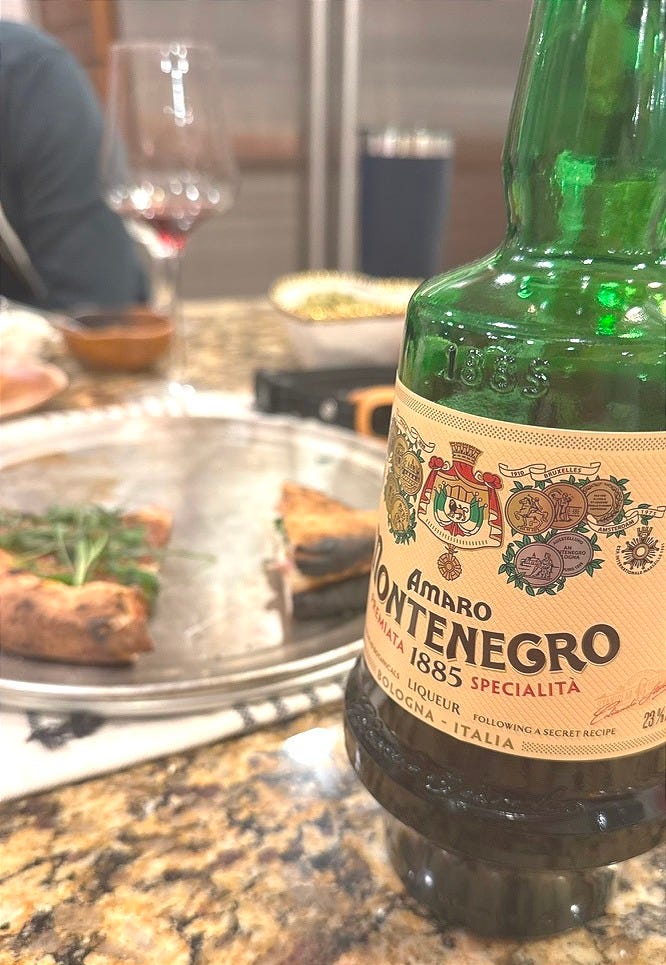
Dear friends from another time and place, come to visit — invading our home and life with theirs. They bring a sense of knowing each other, despite the years that have transpired between visits and the distance since our lives overlapped more regularly. With these friends, homemade pizza night becomes an event. The snow blankets the ground outside, as we gather, not around the dining table, but around the intimacy of the kitchen island. We sit, stand, and lean in, as we stuff our faces with laughter, life stories, carbs that don’t count, and rich wine.
I could go on: lunch with my wife, burgers with my firstborn, beers with a lifelong friend, pancakes with the sixth grade boys.
It’s in these embodied moments that the grace and mercy of my own humanity return. That our incarnate, limited place in this world is powerfully full of wonder and delight. It’s in these incarnate interactions that we become embodied grace to one another, affecting not the world-out-there, but the world-in-here.
John O’Donahue writes, “It is such a privilege to be embodied. You have a relationship to a place through the body … The body is a sacrament: a visible sign of invisible grace.”
Living an embodied, incarnate life, on one hand, acknowledges my finitude, my limits, my deficiencies, my humanity. But on the other hand, it frees me to accept the canvas of my life, where God has placed me, and to make this limited life beautiful right before my eyes.
I realize that even God, in the person of Jesus, took on humanity’s limitations. He barely travelled more than 200 miles away from his hometown his whole life. And yet his incarnation is what we can participate in as we embrace the expansive limits of an embodied life just where we are.
And in doing so, we embody grace as we share the table with those nearest to us.